Capital and lowercase letters with start spot butter drip alphabet
Match up the letters in the waffle maker, or trace them out with marker or playdough. The important thing is to always start your letters at the top. The butter dip shows the direction in which your pencil should start to draw these letters. It is a great way to sort the letter too. Which ones curve, which letters slide, and which letters are straight?
This is a fun way to add play with practice in a dramatic way.
Foundational skills of handwriting and vowel knowledge are a huge treasure for kids. Treasure-seeking pirates find things in the sand to trace around. This is how they learn the new skill of handwriting. Pirate-themed word-play helps create a memorable and fun storyline, with playful use of the letters: r, i, c, and x. The similar grouping of letter shapes makes it easy for them to learn the four-letter groups quickly. Special attention is shown to the importance of the vowel letters.
This makes handwriting a fun adventure with easy-to-trace images that follow a logical pattern. Orton-Gillingham Style letter grouping.
Less letter confusion with b and d reversal problems solved.
The colorful bird points out the all-important vowel sounds and helps lead the pirates to a second discovery “the vowels are a treasure.”
Four Letter Groups
Four books in one. The complete lowercase letter handwriting storybook collection.
Treasure-seeking pirates find things in the sand to trace around. This is how they learn the new skill of handwriting. Pirate-themed word-play helps create a memorable and fun storyline, with playful use of the letters: r, i, c, and x. The similar grouping of letter shapes makes it easy for them to learn the four-letter groups quickly. Special attention is shown to the importance of the vowel letters. With the help of a chatty parrot, the story has incorporated a few vowel sounds. Each letter has a specific visual cue to demonstrate the correct letter starting point. The letters are organized in clusters to help correct letter reversal errors. Each book in the series shares a close relation to Orton-Gillingham’s Style of handwriting instruction groups. Handwriting is an adventure to treasure.
The four titles included in this book: R’s Pirate Letters, C Pirate Letters, I Pirate Letters, X Pirate Letters.
Like wise the use of posters and cards for this writing lessons are great match this book.
Visual Links to Handwriting Groups
1. r, n, m, h, b, p – Letter r is seaweed on the sand, the pirates trace the /r/ shape and that helps to make the other letters in this group. These are the dive down, slide up, and hook letters. Dark blue water on the bottom of the cards.
2. c, a, g, d, q, o, s, e – Letter c is half a coconut. The pirates trace around it in the sand to make the curved letters in this group. These are the /c/ curved letters that share the same starting point. Letter e was added to this group. (funny story in the book for letter /e/) Tallgrass on the bottom of the cards. Great for sand trays.
3. i, j, l, t, f, k – Letter i, are tracks made by turtle-hatchlings. The pirates copy the straight line letters in the sand. Light blue water on the bottom of the cards.
4. v, w, y, x, z, u – Letter x, is the v shape letters it traces around a shark’s tooth. These are the slanted line letters. Letter u was added to this group. (funny story in the book for letter /u/) Tree trunks on the top of these cards. The letter x is the title of the book because of course the pirates use the all important x to mark the spot for the treasure.
Easy letter formation instruction with four sets of illustrated card and posters.
Orton Gillingham Style Illustrated Handwriting worksheets, letter strips, and letter cards.
Lowercase letter support to stop letter reversal errors. Easy to follow letter groups. Make handwriting fast and simple to remember by grouping similar letter shapes, making a muscle memory link.
These 4 different letter groups make a wonderful classroom display and reference for handwriting instruction.
Letter Group 1
1. r, n, m, h, b, p – The letter /r/ is seaweed on the sand, the pirates trace the /r/ shape and that helps to make the other letters in this group. These are the dive down, slide up, and hook letters.
Dark blue water on the bottom of the handwriting cards.
This first group helps teach students to start the letters at the top
Left to right direction of reading and writing
Letter Group 2
2. c, a, g, d, q, o, s, e – Letter c is half a coconut. The pirates trace around the coconut in the sand to make the curved letters in this group. The /c/ curved letters share the same starting point. Letter e was added to this group because it shares the same c shape. (Follow the interaction between a pirate and a monkey. It is a funny story in the book for letter /e/.)
Tallgrass on the bottom of the cards.
Letter Group 3
3. i, j, l, t, f, k – Letter i, are tracks made by turtle-hatchlings. The pirates copy the straight-line letters in the sand.
Light blue water on the bottom of the cards.
Letter Group 4
4. v, w, y, x, z, u – The letter /v/, traces around a shark’s tooth. These are the slanted line letters. Letter u was added to this group. (funny story in the book for letter /u/ and pirate underwear)
Tree trunks on the top of these cards.
Print your own set of letter strips. Great for daily practice, intervention, and more….
Using the Letter c worksheet and letter strips is a great way to teach letters c, a, g, & d. Make a tactile handwriting adventure with a sand tray.
Letter g is just the letter a with a monkey’s tail. In the story, the monkey jumps down from the tree to grab the coconut.
Pirate Book Series Starts with the Letter r.
Starting the r letter set is what the pirates do. This is the best letter to start with, it sets kids up for the correct starting and stopping pencil strokes. It helps create good writing habits. This letter needs to start at the top, not the bottom. It has the same shape and pattern as the often tricky letter b. (r, h, b, they all go the same way)
Orton-Gillingham Style Handwriting in a storybook to make learning the letters a fun adventure.
This is the fourth book in the handwriting series.
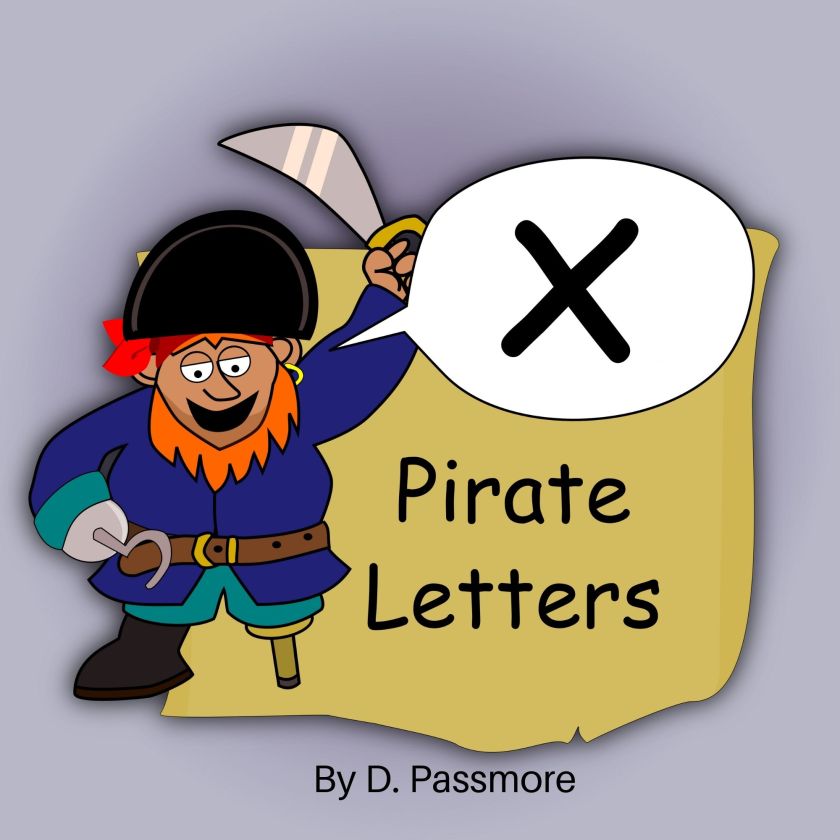
The pirate’s lowercase letter adventure is coming to a close with one of their favorite letters the X.
Of course, because the letter X would traditionally mark the spot where the treasure is located.
In this book, they will learn the slanted letters: v, w, y, x, v, and surprise the last vowel the letter u. The letter u is a very funny part of the story and it includes the vowel sounds are also a type of treasure for the pirates as they learn to write. Thanks to the helpful parrot that flies by.
In this storybook, the lowercase letters are grouped to help improve muscle memory and indicate a common starting point. The pictures illustrate a sensory experience of writing in the sand to stimulate the brain for learning. With letters grouped by similar starting points and slanted downstrokes, it can speed up the handwriting process and improve letter print recognition for reading. Images of the letters share the same shape to help avoid common letter reversal errors. Special attention to paid to the vowel letter, by a colorful bird. Paired with a fun and memorable story to engage the interests of young students.
This is a perfect book to use with sand tray letters.
Orton-Gillingham Style Handwriting in a storybook to make learning fun.
This is the third book in the handwriting series.
The adventure continues when the pirates think that someone has been digging for treasure on the island. A huge surprise in the sand leads them to learn the next set of straight-line letters.
These letters are the third handwriting group. In this story, they will learn the letters: i, j, l, t, f, k.
In this storybook, the lowercase letters are grouped to help improve muscle memory and indicate a common starting point. The pictures illustrate a sensory experience of writing in the sand to stimulate the brain for learning. With letters grouped by similar starting points and straight downstrokes, it can speed up the handwriting process and improve letter print recognition for reading. Images of the letters share the same shape to help avoid common letter reversal errors. Special attention was paid to the vowel letter, by a colorful bird. Paired with a fun and memorable story to engage the interests of young students.
The straight line letters are made alongside the little sea turtle tracks. Little hatchlings start at the top and head straight to the water.
Tall Letters
Letter size is crucial but often overlooked when students are learning to write. Letters like i, j, f, l, t, and k provide great examples to highlight this concept.
i – is small
j – is a fall letter
f, l, t, and k, are tall letters.
Handwriting letter strips can be found on my TPT page. These are great for students to use daily. Practice writing the letters and making the letters sounds are very important for reading and spelling.
This is a perfect book to use with sand tray letters.
C Pirate Letters: Handwriting Storybook Lowercase Letter Formation
This is the second book in the series Pirate Handwriting.
The lowercase letters are grouped to help improve muscle memory, picture a sensory experience to stimulate the brain for learning, and avoid common letter reversal errors. In a storybook style, the letters are grouped by similar starting points and curved strokes to speed up the handwriting process and improve letter print recognition for reading. Presented with a fun and memorable story to engage the interests of young students.
This is the second group of letters that they learn: c, a, g, d, q, o, s, e.
These letters all share the common C shape. The pirates use the round coconut space to trace around in the sand.
They also start to recognize vowel sounds, with the help of a colorful bird and a curious monkey they find on the island.
R’s Pirate Letters: Handwriting Storybook Lowercase Letter Formation
This is the first book in the Pirate Handwriting series.
The letters in this book all share a similar ‘r’ shape and fine motor direction with a common downstroke and slide-up hook.
Letters: r, n, m, h, b, p
Treasure-seeking pirates are distracted by a new adventure. That leads them to start learning the valuable skill of handwriting.
The lowercase letters are grouped to help improve muscle memory, picture a sensory experience to stimulate the brain for learning, and avoid common letter reversal errors. With letters that are grouped by similar starting points and down strokes to speed up the handwriting process and improve letter print recognition for reading. Paired with a fun and memorable story to engage the interests of young students.
Created to help children learn the correct starting points for the lower case letters, and create an auditory link between the visually related objects that make the correct letter sound. Each page has color animal actions to follow.
The students really like the letter u page. they laugh at the word underwear. Uncle umbrella bird flies under the underwear, these are all short u vowels sounds. This is important because bossy r words block the short u sound and the long u words like ukulele do not help students with the short vowel decoding of CVC words. (consonant vowel consonant)
Ukulele is also a Hawaiian word, so the long e sound at the end of word does not follow the normal English spelling rules.
Letter tracing cards can be found on my Teachers Pay Teachers shop – Pure Joy Teaching
the perfect book for young learners! This colorful, interactive resource is designed to teach preschool and kindergarten children the correct starting and stopping points of lowercase letters, making it a fantastic tool for early literacy development.
Awesome Animal Alphabet Poems: A Fun and Engaging Learning Adventure
Welcome to Awesome Animal Alphabet Poems—the perfect book for young learners! This colorful, interactive resource is designed to teach preschool and kindergarten children. Practicing the correct starting and stopping points of lowercase letters, makes it a fantastic tool for early literacy development.
Animal Theme
Each page features fun, animal-themed poems that guide children step-by-step as they trace the letters with their fingers. With clear starting points marked by a green dot and arrows that direct the movements, little learners can easily follow the animal actions while mastering each letter.
Engaging & Fun: Simple rhymes and vibrant illustrations captivate children’s attention and make learning the alphabet an enjoyable experience.
Kinesthetic Learning: The finger-tracing activity helps build muscle memory, promoting better letter recognition and laying the foundation for handwriting skills.
Memorable Rhymes: Easy-to-remember sayings help children recall the movements of each letter, supporting both reading and writing success.
Perfect for Home or School: Ideal for classroom activities or at-home learning, this book is designed to nurture early literacy skills in a way that sparks curiosity about animals and the world around them.
Builds Confidence: With every turn of the page, children will gain confidence in their letter-writing abilities, setting them up for future success in handwriting and reading.
Letter Sounds: Poems use words that tie into the main letter sound. Letter sounds are extremely important for reading and decoding skills.
From A to Z, Awesome Animal Alphabet Poems is a fun, effective, and memorable way to help children discover the world of letters through animals, movement, and rhymes. Whether in the classroom or at home, this book is sure to be a favorite for young learners as they begin their journey toward literacy!
Students can pretend to be an airplane, and mirror the letter movements of the teacher. This exercise can help them learn the correct starting and stopping points of the capital letters. The helpful green dot shows the starting point of the letter, with numbered steps for letters that have more than one step. Valuable teacher instruction pages and Flash Card pages that can be cut out of the book to use in class. The reversed alphabet chart on the back cover of this book, helps to remind the teacher in which direction to make the letters. Very helpful when the book or the card is facing the students.
Mirror image; Why does it look backwards?
Remember my right is your left, when we are facing each other. This book will help teachers so the students will NOT be seeing the reversed Image by mistake. It can aid and support future handwriting success, while learning feels like play.